BLOG
10 Things You Might Not Know About Alpine Wines
Andrea Eby
Blog
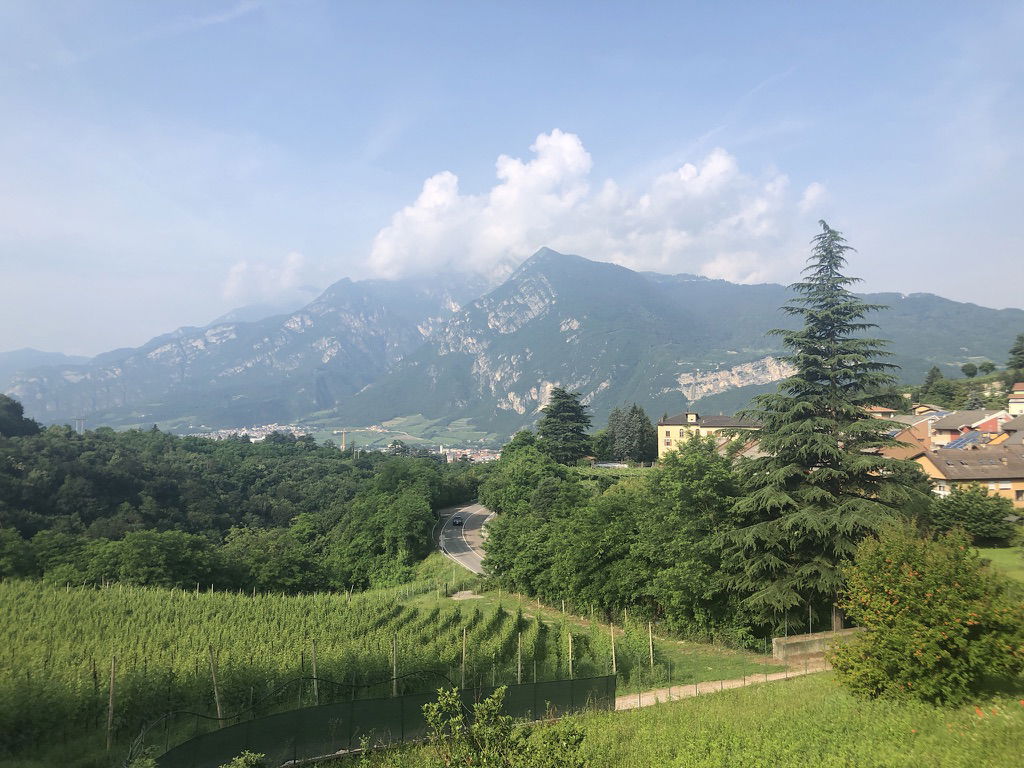
When most Italian wine consumers think about Italy, they envision the rolling hills of Tuscany or the sun-drenched shores of the Amalfi coast. However, there is much more to Italy and its wines than these landscapes. This month at WSG we turn our attention northward to the land of the Alps and the Dolomites, where a whole other Italy exists. Some of Italy's most distinctive wines come from its far north where alpine viticulture is the norm and snowfall and sunshine shape the vineyard seasons.
Trentino-Alto Adige, Valle d’Aosta and parts of Lombardia form Italy's alpine wine heartland. Here, altitude replaces latitude as the defining climatic factor and centuries of mountain farming have produced wines of tension, precision and remarkable site expression.
Below are 10 things you might not know about Alpine Italy — and why they matter.
1. Vineyards in the Clouds
Italy is home to Europe's highest established commercial vineyards. The vineyards of the Blanc de Morgex et de La Salle subzone are perched in the foothills of Mont Blanc at elevations up to 1,300 meters. The grape that thrives here is Prié. Its late-budding nature avoids the region's spring frosts, while its early ripening saves it from autumn cold-snaps. The resulting wines are renowned for their crystalline mineral purity and quiet intensity but quantities are miniscule and few manage to make an appearance on the export market.
2. Sunshine and Palm Trees
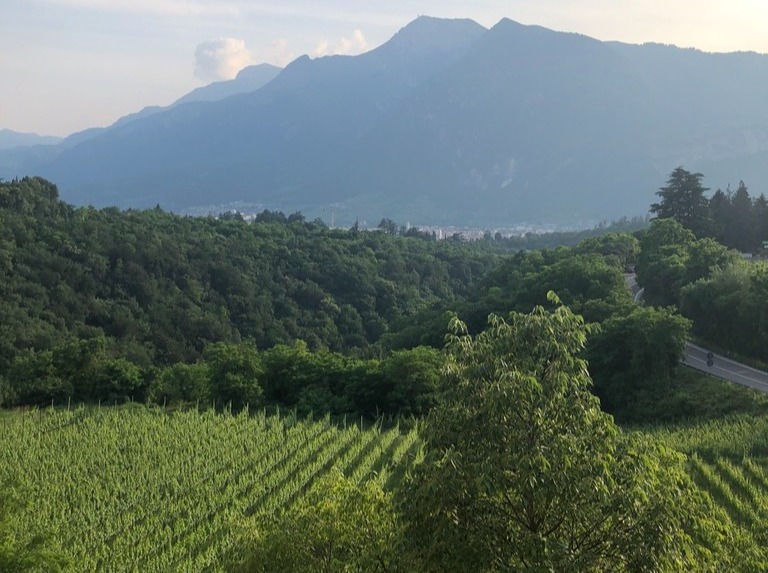
While visions of the Alps often conjure images of snow-capped peaks, they should also include sunshine. Despite mountainous settings, many alpine valleys record remarkably high annual sunshine hours. In Valle d'Aosta, high mountains block clouds from the north and the region enjoys 2,200 hours of sunshine per year. During summer, Alto Adige's Valdadige Valley surrounding Bolzano is one of Italy's hottest places. The mountains act as a heat trap and temperatures can soar above those in Sicily. Palm trees grow in Bolzano!
3. Elevation Over Latitude
Across Trentino-Alto Adige, Lombardia’s Valtellina and Valle d'Aosta, elevation — not north-south position — is the dominant factor shaping wine style. Large temperature swings between day and night slow sugar accumulation, preserve acidity and extend the growing season, producing wines that are aromatically complex and highlight tension rather than weight.
4. A Preference for Pergolas
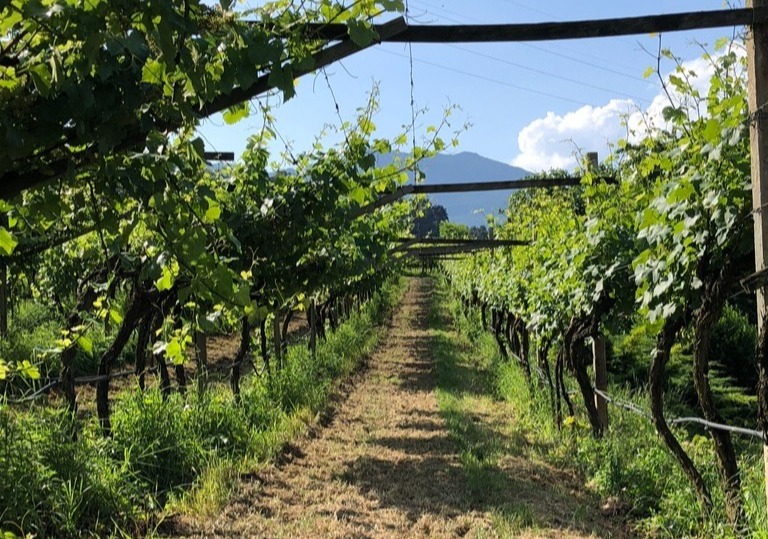
Across Italy’s alpine wine regions, vines are often trained overhead rather than in the neat vertical rows many of us are familiar with. These systems are forms of pergola, developed as practical responses to alpine conditions.
In Valle d'Aosta, pergolas protect vines under heavy winter snow. In Trentino-Alto Adige, pergolas moderate intense alpine sunlight, improve airflow and help grapes ripen evenly despite sharp temperature swings. In an era of climate change, these systems are being reassessed as valuable tools for preserving balance in extreme environments.
5. Helicopters and Heroic Viticulture
In the steepest parts of Valtellina, vineyards cling to mountainsides in what Italians call viticoltura eroica (heroic viticulture): farming on slopes so steep that nearly everything must be done by hand. Stone terraces are stacked at dangerous angles where tractors aren't an option. Growers rely on small funiculars or monorail cable systems that haul grapes, tools and equipment along slopes where roads don't exist. In the most extreme vineyards, helicopters may lift grapes safely down to the valley floor when the weather is turning and speed is of the essence.
6. The Many Names of Nebbiolo
One of the joys of Italian wine is that the same grape often answers to different names. In Valtellina, Nebbiolo is known as Chiavennasca, reflecting its long history in this alpine valley. The result is Nebbiolo that is paler in color, more linear in structure and often marked by a mineral edge. Travel into Valle d'Aosta and Nebbiolo appears as Spanna. Here, at even higher elevations, the grape produces wines that are taut, fragrant and firmly shaped by elevation.
7. The Language of Labels
In alpine Italy, labels often reflect centuries of cultural overlap where Italian, Germanic, Austrian, French and Swiss influences meet. In Trentino-Alto Adige, bilingual labels are common and German terminology frequently appears alongside Italian, reflecting the region's history within the Austro-Hungarian Empire. Terms like dunkel or scuro may indicate a darker wine, while Kretzer refers to a pale rosé made from Schiava. In Valle d'Aosta, French is officially recognized alongside Italian and labels reflect this bilingual reality.
8. A Deep Diversity
While Pinot Grigio and Glera may be the most commercially well-known varieties in Northern Italy, the diversity extends far beyond. In Trentino-Alto Adige, Schiava (Vernatsch) remains a historic local red prized for its light body, while cool-climate whites like Müller-Thurgau, Kerner and Sylvaner thrive in higher sites. Even familiar grapes such as Pinot Bianco and Gewürztraminer take on sharper expressions here. In Valle d'Aosta, extreme isolation has helped preserve grape varieties found almost nowhere else, including Petit Rouge, Fumin, Cornalin and Prié Blanc.
While Pinot Grigio and Glera may be the most commercially well-known varieties in Northern Italy, the diversity extends far beyond. In Trentino-Alto Adige, Schiava (Vernatsch) remains a historic local red prized for its light body and drinkability, while cool-climate whites such as Müller-Thurgau, Kerner and Sylvaner thrive in higher, cooler sites. Even familiar grapes like Pinot Bianco and Gewürztraminer take on sharper, more restrained expressions at altitude.
Travel west into Valle d'Aosta, and extreme isolation has helped preserve grape varieties found almost nowhere else, including Petit Rouge, Fumin, Cornalin and Prié. Alongside these traditional grapes, some alpine growers are also experimenting carefully with PIWI varieties (disease-resistant vines that reduce the need for chemical treatments) reflecting a long-standing regional focus on resilience and working with, rather than against, challenging mountain conditions.
9. Butter Up
If you sit down to eat in Trentino-Alto Adige or Valle d'Aosta, it becomes clear this isn't olive-oil Italy. Here, butter often replaces olive oil at table and in the kitchen. Think speck, canederli (bread dumplings), melted cheeses, polenta and fonduta made with Fontina. In Valtellina, pizzoccheri (buckwheat pasta with potatoes, greens, butter and cheese) tells the same story. These rich, savory (and calorie dense) dishes are complemented perfectly by the refreshing acidity, moderate alcohol level and nuanced flavors of many Alpine wines. A match made close to heaven.
10. Ancient Vines for Modern Times
Lower alcohol, high acidity and a clear sense of place make many alpine wines perfectly suited to contemporary tastes. As drinkers increasingly seek freshness, balance and wines that work at the table, Alpine Italy has a head start. Altitude naturally slows ripening, preserves acidity and keeps alcohol levels in check, while steep slopes encourage wines that offer unique expressions. Practices that once seemed old-fashioned: pergola training, high-elevation sites and painstaking hand work, now look increasingly relevant in a warming world. It would appear that Alpine Italy isn't reinventing itself for the future; in many ways, the future has finally caught up to it.