
BLOG
Insights and Opinions
Gabriel Lepousez
Insights and Opinions
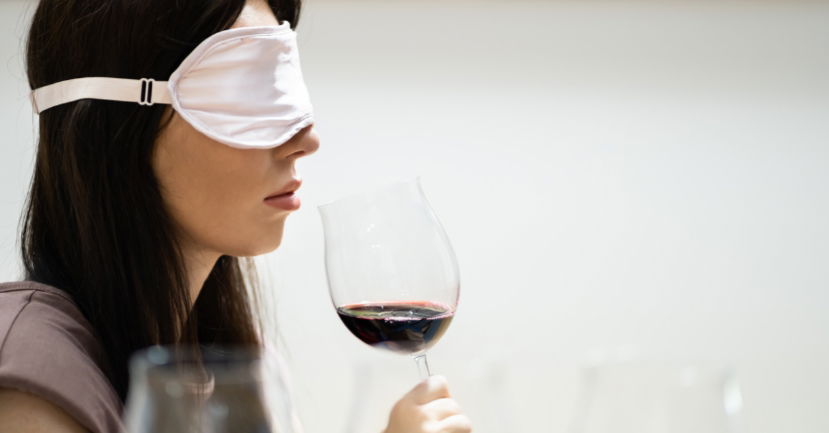
This article is the first of an upcoming series by French neuroscientist Gabriel Lepousez. Gabriel is part of the Scientific Committee formed by WSG in the context of its "Architecture of Taste Research Project". He has also presented a fascinating segment on "The Neuroscience of Wine Tasting" as...
Julien Camus
Insights and Opinions
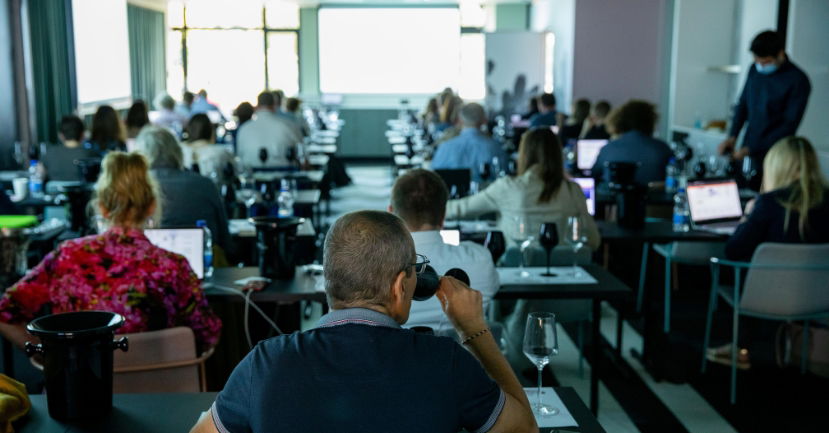
On the 6th of September 2021, Wine Scholar Guild hosted the first large-scale blind-tasting panel as part of its recently announced The Architecture of Taste Research Project. Hosted at the Bristol Hotel in Colmar, Alsace, this panel tasting launched WSG’s research on the tactile and geosensorial...
Kevin Day
Insights and Opinions
It is a regular occurrence, even for the most accomplished wine aficionado: a loss of words to describe exactly what’s going on in the glass. Try as we might, the language of wine will always be a tricky landscape to navigate. But, as educators and students of wine, it is a necessity. Whether...
Julien Camus
Insights and Opinions
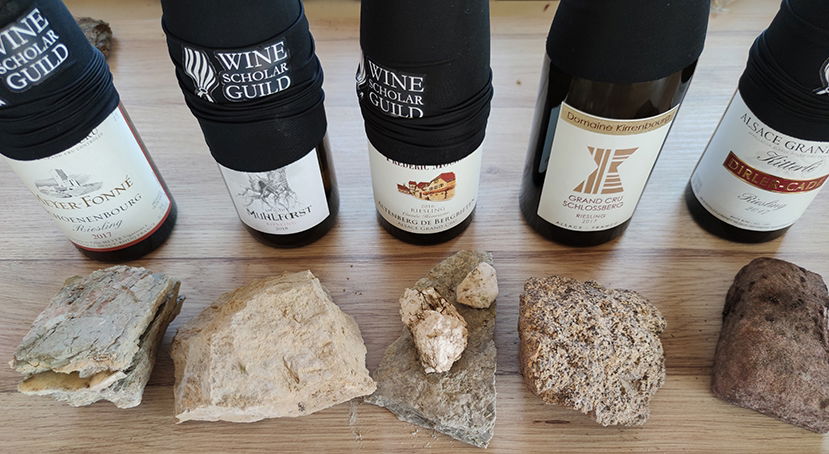
Is a wine horizontal or vertical? Square or round? Hollow or dense? Relaxed or tensed? Grainy or smooth? This is a small sample of GeoSensorial Tasting vocabulary — a method that seeks to empower the taster to feel, interpret and give voice to wines of place. By focusing on mouthfeel and...
Pierre Freyermuth
Ripeness and Balance with Andrew Jefford and Julia Harding MW
KD: Let’s zero in on alcohol, because — unlike pH or tannin — it is a data-point on every wine label, and one of the only technical clues on a wine label that can offer insight into the balance of the product. What can consumers and wine students glean from reading this number on the label?...
Pierre Freyermuth
Ripeness and Balance with Andrew Jefford and Julia Harding MW
KD: One of the key words we hear a lot about in the wine industry — both from wine professionals and winemakers — is a desire for “freshness” in a wine. It is a rather nebulous term (and hard to argue: who doesn’t want freshness?) but is there something to it? Have wine styles shifted toward more...
Pierre Freyermuth
Ripeness and Balance with Andrew Jefford and Julia Harding MW
KD: I want to circle back to this issue of personal taste, Julia. Do you feel that writers and educators have an obligation to at least disclose these personal taste sensitivities to their readers or students, so that descriptors of wine are seen through a lens of experience instead of something...
Pierre Freyermuth
Ripeness and Balance with Andrew Jefford and Julia Harding MW
KD: Let’s shift gears a bit. I can see how a consumer or new student of wine could easily confuse “moderate” or “medium” elements in a wine as “balance.” I know I struggled with that early on! But certainly a high-tannin or high-acidity wine, or a low-alcohol or high-alcohol wine, could still be...
Pierre Freyermuth
Ripeness and Balance with Andrew Jefford and Julia Harding MW
KD: The fulcrum analogy is a perfect visualization of it, Julia. Thank you. On to our last topic. As wine writers, we always get a front-row seat to the generational battle over ripeness, and in the age of climate change, that battle has become even more accentuated. I think of a recent trip to...
Pierre Freyermuth
Ripeness and Balance with Andrew Jefford and Julia Harding MW
KD: So much of this conversation — balance, freshness, alcohol content, etc. — stems from when the grapes are harvested. My question has to do with ripeness, because the ultimate outcome of a wine’s composition often stems from when and how the winemaker harvests the grapes. However, it means...
Pierre Freyermuth
Ripeness and Balance with Andrew Jefford and Julia Harding MW
KD: Andrew, how do you discern balance when you are tasting wines? Do you have any tips? How much of it is a feeling? AJ: The first thing to say here is that I strongly believe that the key to finding and understanding balance in a wine becomes apparent as you drink a wine, rather than when you...
Pierre Freyermuth
Ripeness and Balance with Andrew Jefford and Julia Harding MW
KD: You touched upon this a moment ago, Andrew, but currently, lower alcohol wines are in vogue within many circles of the wine industry, and among consumers. Within other circles, so-called “Parker” wines — a style predicated on boldness, richness and amplified tones — remain the driving force....
Pierre Freyermuth
Ripeness and Balance with Andrew Jefford and Julia Harding MW
KD: I want to get both of your opinions on this next question: the elements that help preserve wine long-term — for example, acidity, tannins, and alcohol — are also the ones we discuss in terms of balance. Wines that age well are always balanced, but not all balanced wines can age, correct?...
Kevin Day
Insights and Opinions
Few, if any, moments in wine are more dramatic than when a producer decides it is time to pick fruit. Whether they rely upon a Brix reading, a visual cue from the grape seeds, or the finely tuned instrument of their own palate, making the call to harvest a plot of grapes is a decision fraught with...
Pierre Freyermuth
What is the Future of Appellations? with Andrew Jefford and Robert Joseph
KD: Hypothetically, what would the wine world look today if it weren’t for appellations? Would the concept of terroir even be a discussion point without them? And do appellations create unrealistic expectations about terroir? AJ: Terroir would exist as a concept because there would be a small set...
Pierre Freyermuth
What is the Future of Appellations? with Andrew Jefford and Robert Joseph
KD: Andrew noted that without appellations — specifically European ones — the “global wine offer” would be simpler and that wine would have to rely more on marketing strategies. Do you agree, Robert, and secondly, would that be a good thing for wine consumers? Would it be more accessible to more...
Pierre Freyermuth
What is the Future of Appellations? with Andrew Jefford and Robert Joseph
The Great Debate: What is the Future of Appellations? with Andrew Jefford and Robert Joseph KD: It would seem that with climate change, the notion of a wine region holding on to a rigid identity over the next several years or decades is borderline ridiculous. We need look no further than...
Pierre Freyermuth
What is the Future of Appellations? with Andrew Jefford and Robert Joseph
The Great Debate: What is the Future of Appellations? with Andrew Jefford and Robert Joseph KD: One final question..., are we moving toward a future of appellation irrelevance? Has “the everyday consumer” already made them irrelevant? AJ: Not at all. Remember, as I outlined earlier, that...
Pierre Freyermuth
What is the Future of Appellations? with Andrew Jefford and Robert Joseph
KD: Let’s shift gears and focus on what appellations have accomplished, and what role they might play in the preservation of wine heritage going forward. As an Italian wine fanatic, few things excite me more than geeking out over rare grape varieties that demonstrate something unique in the glass....
Pierre Freyermuth
What is the Future of Appellations? with Andrew Jefford and Robert Joseph
KD: Let’s move on. While the EU wine quality pyramid for appellations (i.e. PDO/PGI) is intended to have some semblance of a hierarchy, all three of us could cite dozens of examples of exceptional, rule-breaking wines made as “table wine” or with a broadly generic regional appellation. Andrew, is...